

Analytical Book Review – A Basic Guide to Eastern Orthodox Theology: Introducing Beliefs and Practices
Author Bio
Eve Tibbs, author of A Basic Guide to Eastern Orthodox Theology, is an affiliate professor of theology at Fuller University. She teaches Historical, Systematic, and Eastern Orthodox Theologies while focusing her research on the Holy Trinity and Personhood, Ecclesiology, Early Church History, and Doctrinal Development.[1] She is also a member of the Faith and Order Commission of the World Council of Churches, representing the Orthodox Ecumenical Patriarchate of Constantinople, and served as Chair of the Eastern Orthodox Studies Group of the American Academy of Religion.[2]
Main Themes
One of the main themes of Tibbs’ book centers around the continuation of the Eastern Orthodox faith through the centuries. She contends that the Eastern Orthodox Church, through the power of the Holy Spirit, is one and undivided and (for the most part), unchanged, though it has faced many challenges (3). Orthodox theology is directly given to the church by God and is the fruit of the Holy Spirit’s power upon the Apostolic leaders, unbroken since Pentecost (9).
Another central theme of the book is the centrality of worship in the beliefs and practices of Eastern Orthodoxy. Believing that the church has maintained a continuous stream of faith and worship since the original apostles (10), worship is “primary” and all other endeavors are secondary (17). Belief about who God is in His nature is not experienced in theological study (although that is important) but through the activities of prayer and worship (18).
Lastly, another theme is the strong emphasis on the Holy Trinity throughout the Eastern Orthodox experience. All Orthodox prayers are in the name of the three persons of the Trinity (126). Orthodox theology can never separate from Trinitarian contemplation and worship (15).
Personal Response
The book challenges me to think deeply about the three themes mentioned above. My Wesleyan/Charismatic theology has a strong emphasis on Father, Son, and Holy Spirit, but more separately than unified. The chapters on worship and the Holy Trinity challenge me to a concentrated understanding and unification of these subjects. The Orthodox Christian enters worship in a way that emphasizes the union of Heaven and Earth (146). Is the modern worship in my church drawn towards the mysteries of the fullness of the Trinitarian God and the presence of Heaven in the sanctuary? Maybe, however, throughout the book, Tibbs challenges me to think more “eastern” in worship, and align with the traditions dating back to first-century believers.
Single Takeaway
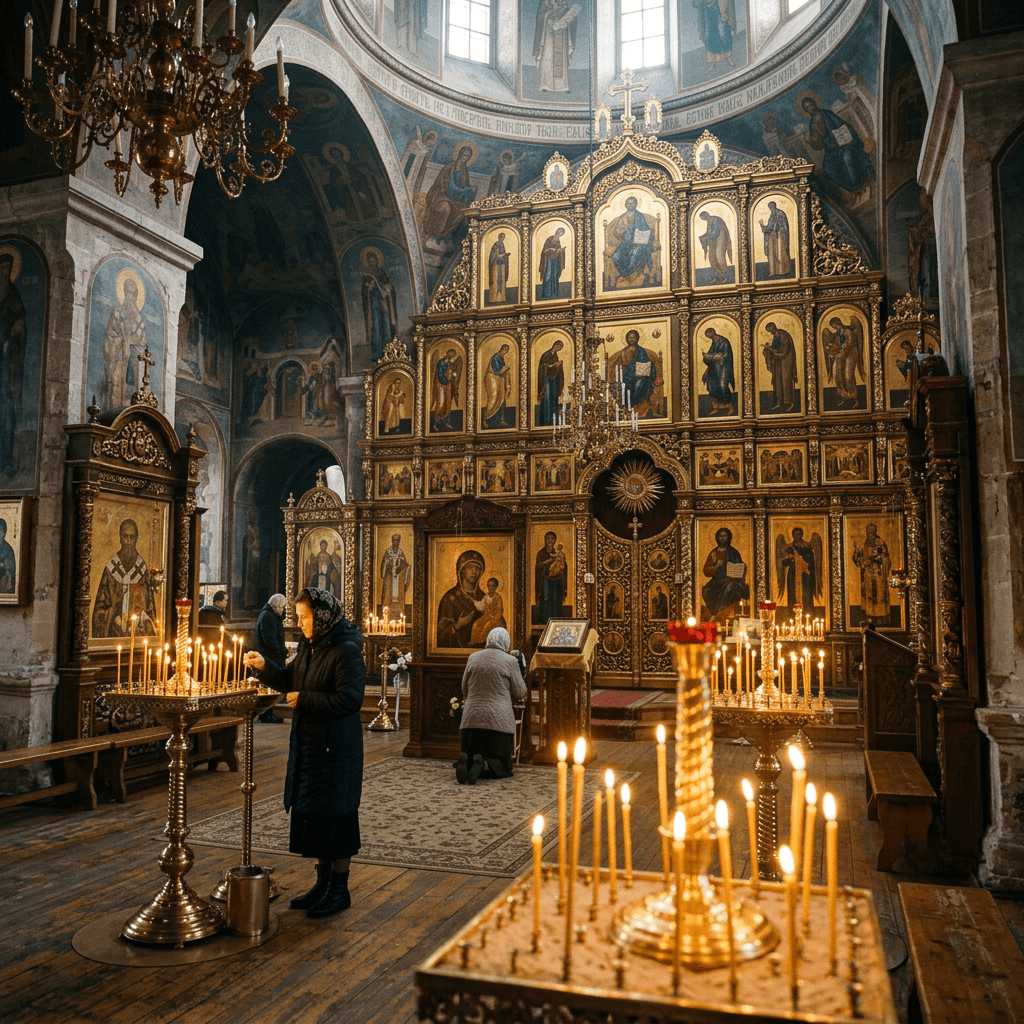
The most helpful takeaway from the book was the concept of “entering into” worship as opposed to attending a service (147). The Eastern church is designed in such a way as to draw the congregant into worship from the moment they step into the narthex. Taking an Eastern mindset into the modern church means encouraging my local church to help those attending enter an atmosphere that promotes worship and prayer. There may not be icons and a dome that portray the heavenly realms, but softer lights, softer music, people engaged in reflection and prayer prior to the service, and opportunities within the service may bring an Eastern attitude of entering the presence of God.
Spiritual Formation Practices
Aspects of Eastern Orthodoxy that help clarify spiritual formation are two-fold. First, Eastern Orthodoxy is a faith of the senses. When one engages in worship, one encounters the sights of the icons, the smell of the incense, the sounds of the chanting, the taste of the Eucharist, and the touch of the sign of the cross. Developing spiritually from an Eastern perspective means that one is developing the senses to feel and experience the presence of God in prayer and in worship. Tibbs, through the chapter on worship, describes the experiences of worship and engagement with the sacraments as not just theological movements, but experiences of the senses.
Second, developing spiritually in Eastern Orthodoxy means that one must encounter and engage with the spiritual fathers and mothers who have come before us. Tibbs states repeatedly throughout the book that the Eastern Orthodox faith is linked to the first apostles in Acts 2. This means that the early church writers beyond the New Testament have worthy writings that can challenge one, not only theologically, but spiritually. Developing a pattern of engaging with writers such as Gregory of Nyssa, John Chrysostom, and Ignatius of Antioch can enrich, challenge, and encourage the believer to different forms of thought and prayer.
Overall, the book was an eye-opening adventure into a world most westerners, including myself, had not ventured into. I am encouraged to take theology and worship further east and further ancient. Twenty-first-century believers, Protestant, Roman Catholic, Coptic, and Eastern Orthodox, are members of the Body of Christ, which extends over two millennia.
[1] Eve Tibbs | Fuller Seminary, August 18, 2016, https://fuller.edu/adjunct/eve-tibbs/.
[2] Eve Tibbs | Fuller Seminary.

