As with any Jack Hayford book, Glory on Your House is dense with lessons learned. These lessons are not esoteric principles, but practical applications of how God’s glory can permeate the life of the believer as well as their church and community. The book provides a framework for me to take these principles and apply them to my everyday life and ministry.
Christ and Culture
Niebuhr, in his book Christ and Culture, describes a problem with a dual demand on Christians from their faith and from the culture they live (2). Niebuhr observes that a Christian loves with agape love, hope, obedience to Christ, faith, and humility (28). Culture has its own traits that focus on the social (32), human achievements (33), as well as temporal, material, and conserved values (36-37). To answer this problem, Niebuhr provides five answers (40-43). These answers have two polar extremes and three median solutions. This essay will evaluate Niebuhr’s answers to the problem of Christ and culture and evaluate where they may fit in different cultural applications.
Ethics for the Real World
The scenario: Murray went to a very busy Costco. As he unloaded his shopping basket into his car, he knew he was late picking up his daughter from soccer. Murray realized he had a bottle of Italian Seasoning that he had not paid for. Should he go back and pay for it, or go and pick up his daughter?
Theology of Ministry: Theological Statement
My theological views can be summed up with one word: synthesis. Because I was not raised as a Christian, I was not immersed in a single form of Christian theological expression. Instead, I was exposed not only to a wide variety of theological perspectives but also to a diverse group of people holding these perspectives. I was exposed to various theologies throughout my teenage years, including Evangelical, Southern Baptist, Christian and Missionary Alliance, and United Methodist perspectives. In my college years, I was exposed to Anglican, Roman Catholic, Eastern Orthodox, Reformed/Calvinist, and charismatic theologies. Now, I have realized that I have synthesized many of these perspectives through listening, reading, fellowshipping, and worshipping with followers of Jesus from all these faith traditions.
Reading Report: Essentials of Pentecostal Theology: An Eternal and Unchanging Lord Powerfully Present and Active by the Holy Spirit
Tony Richie's book Essentials of Pentecostal Theology: An Eternal and Unchanging Lord Powerfully Present and Active by the Holy Spirit attempts to answer the questions, “What is Pentecostalism?” and “What do Pentecostal Christians believe and practice?” This quest for definition is challenging because Pentecostal theology is sometimes a moving target, with a broad range of “dramatic diversity” that crosses multidenominational, multicultural, and political lines.
Stories of the Rabbi: The Gospel of Mark #13
The death of John the Baptist is very sad, but it is an important story that must be told. Mark 6:14-2
Reading Report: The Pastor as Public Theologian: Reclaiming a Lost Vision
n his introduction to the book, Vanhoozer contends that pastors have primarily abandoned their function of delivering theology in a public setting. Specifically, he states that the “underlying conviction is that theological minds need to return to where they belong: in the body of Christ.” The problem is that, while tied up with a multiplicity of demands, pastors put theology aside, which is ultimately detrimental to the church body.
Stories of the Rabbi: The Gospel of Mark #12
Mark 6:1-13 shows Jesus as a small-town guy defined by his vocation and family, not by who he actually is. Also, the disciples get to go it alone in ministry.
Stories of the Rabbi: The Gospel of Mark #11
Mark 5:21-43 we encounter a little girl who is sick unto death and a woman who has had a bleeding issue for 12 years. Both have unexpected encounters with the Rabbi!
Stories of the Rabbi: The Gospel of Mark #10
Mark 5:1-20 brings Jesus and the disciples to the Decapolis after a furious storm. Encountering a demon-possessed man, Jesus does something highly unusual.
Stories of the Rabbi: The Gospel of Mark #9
We continue with more parables and discussing the nature of the Kingdom of God. We also see how Jesus deals with a demonic storm that came his way.
Stories of the Rabbi: The Gospel of Mark #8
This week, we continue with Mark 3:31-4:25. The parable of the sower of the seeds leads us to ask serious questions about the ministry Jesus is calling us to. How wide should we throw the seed? We will also discuss a parable about lamps and light.
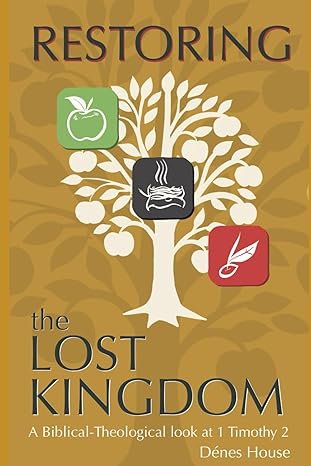
Book Review: Restoring the Lost Kingdom: A Biblical-Theological Look at 1 Timothy 2 by Dénes House
Having studied theology and the Bible for many years, I need to be reminded (with some frequency) that the conclusions I reach through my study have real-world implications that affect people in real-world situations. This is the case when addressing the issue of women in leadership roles within the household, the church, and society. The conclusions may be valid and biblical, but that doesn’t mean that those conclusions won’t impact people and relationships. Therefore, when doing biblical and theological study, I need to be careful not only with how I study and what conclusions I come to but also need to be careful with how I deliver those conclusions.
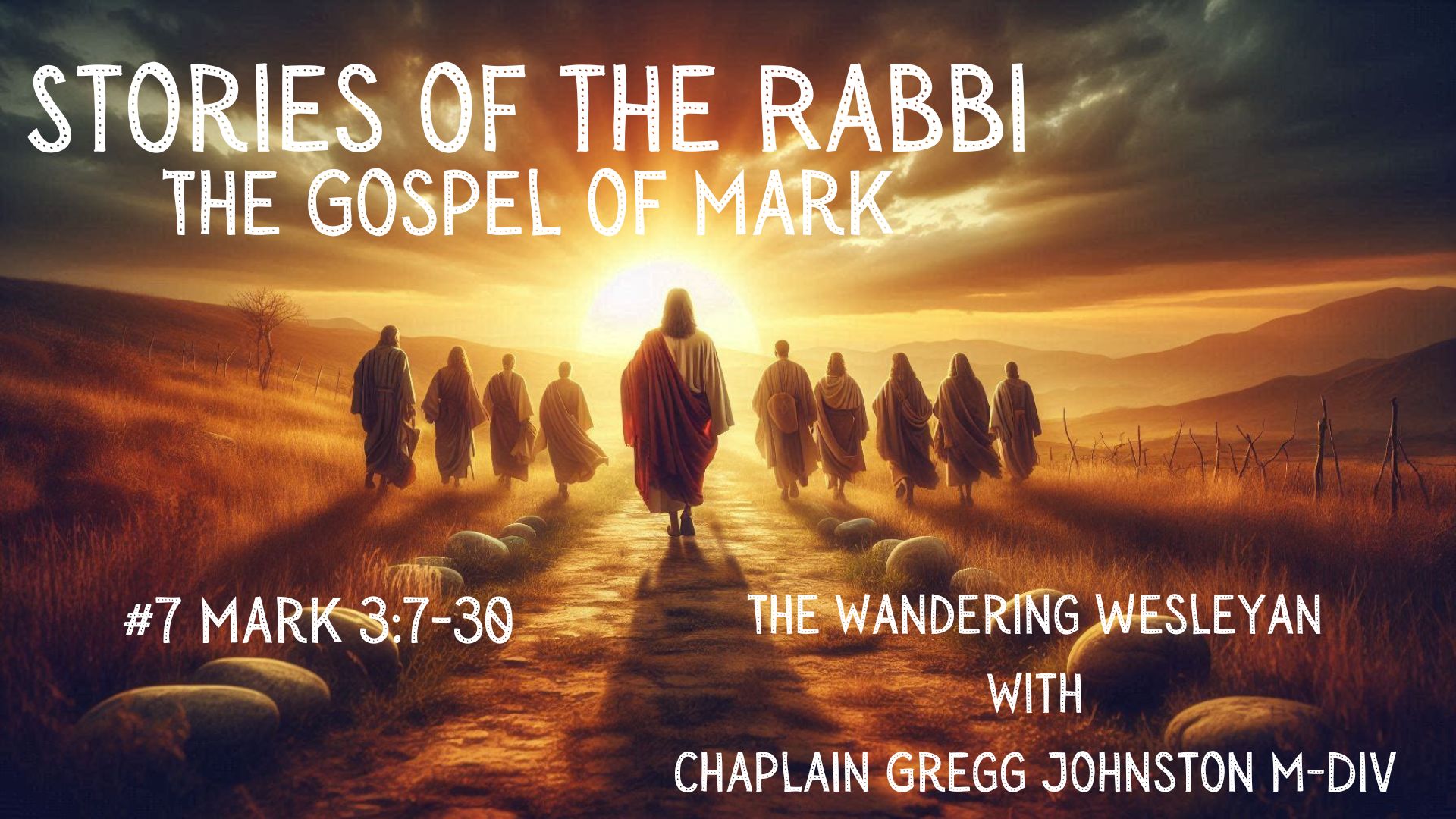
Stories of the Rabbi: The Gospel of Mark #7
This week, our study of the Gospel of Mark brings us to the selection of Jesus' 12 closest students. We will discuss the difference between a disciple and an apostle. Also, we have some more parables about a divided kingdom and an unforgivable sin.
Stories of the Rabbi: The Gospel of Mark #6
Rules, rules, and more rules. Humans love to make many rules, adding to the moral codes God provides us. Why do we, as humans, do this! Mark 2:23-3:6 gives some insight into this legalism.
Stories of the Rabbi: The Gospel of Mark #5
This week, we dive into Mark 2:13-22. Levi is called to be a disciple, and we look at parables of unshrunk cloth and new wineskins. What's that all about?
Stories of the Rabbi: The Gospel of Mark #4
The Gospel of Mark with touching an untouchable man and healing the body and the Spirit.
Stories of the Rabbi: The Gospel of Mark #3
The Kingdom of God has been revealed, but now it is time for the Kingdom of God to be demonstrated. This week, we look at Mark 1:21-34.
Stories of the Rabbi: The Gospel of Mark #2
This week we look at Mark 1:9-20. Several important themes are developing including a major theme - The Kingdom of God.
Stories of the Rabbi: The Gospel of Mark #1
We begin our new series focusing on the Gospel of Mark. This video will introduce us to Mark and his gospel. We will also begin our study with Mark 1:1-8.
Three Unexpected Evangelists: A Man On Trial John 9
The man born blind in the Gospel of John, chapter 9, posed some problems for Jesus's disciples, the man's parents, and, ultimately, the man. He was put on trial for an amazing miracle. All he had to give was his testimony.
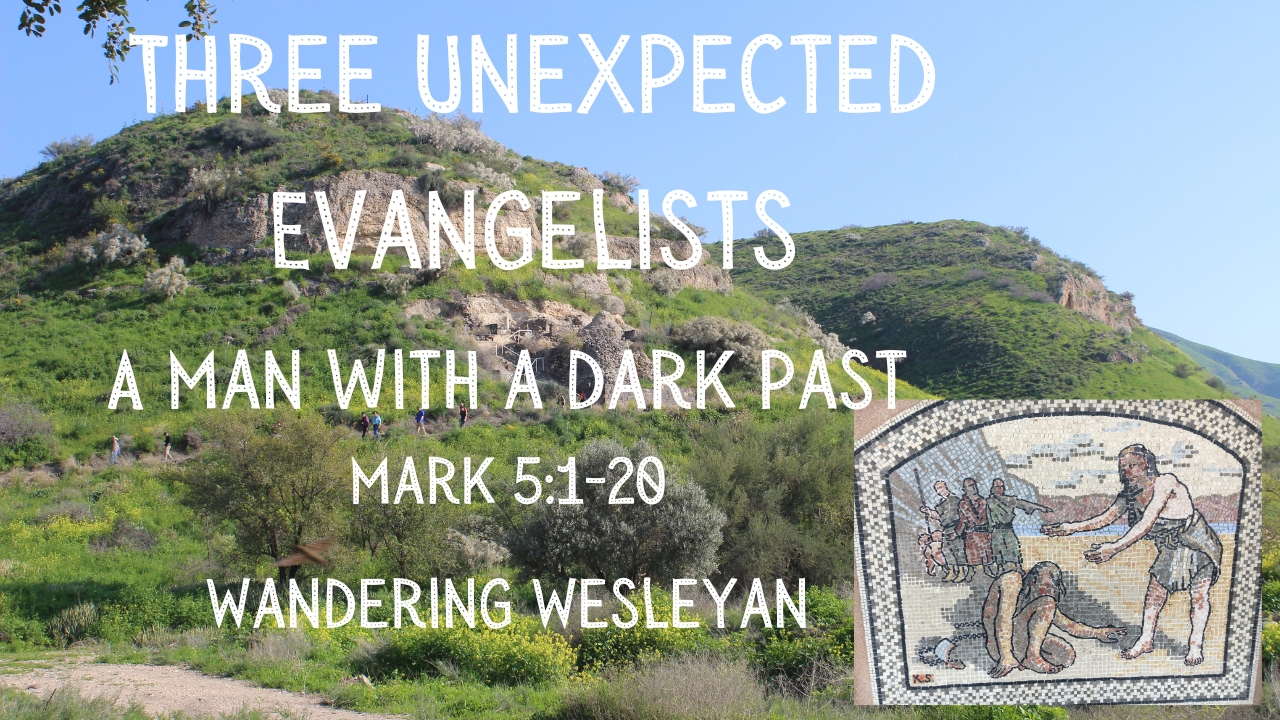
Three Unexpected Evangelists: A man with a dark past Mark 5:1-20
The demoniac in the Gospel of Mark 5:1-20 was the least likely person to bring a message of love and salvation to the people of his region. But an encounter with Jesus freed him of the darkness that developed him and set him free to spread the Gospel.
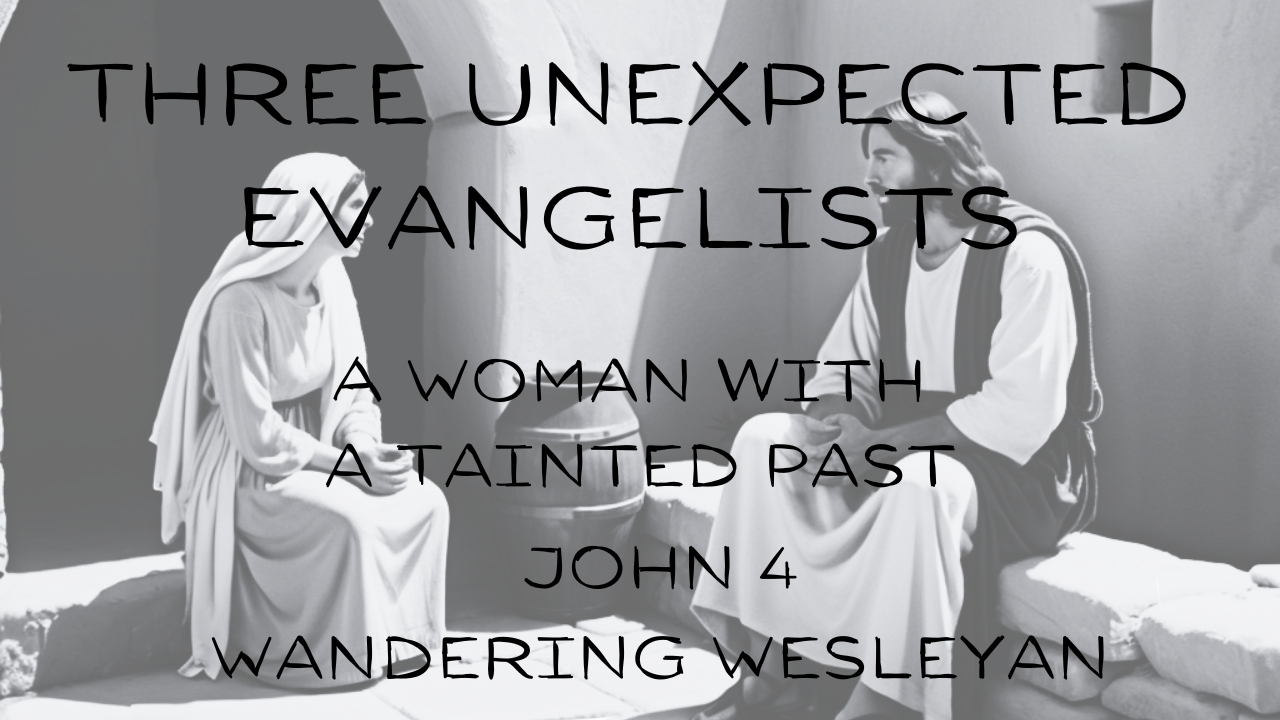
Three Unexpected Evangelists: A woman with a tainted past John 4
This week, we will take a deep dive into the woman at the well in the Gospel of John chapter 4. This woman was scorned by society and tainted by her past. However, Jesus saw her as someone worthy of love and mission.
Book Review: On Earth As It Is in Heaven by C. Peter Wagner
On Earth As It Is In Heaven by C. Peter Wagner is a book I have wanted to read for some time. Wagner’s work has been maligned as well as triumphed by many. The term “New Apostolic Reformation” (NAR) has been used chiefly by reformed cessationists as a pejorative against all charismatics (yeah, I’m looking at you, MacArthur), and Wagner seems to be the only one who has used it. The book has been highly influential in Charismatic circles, especially among the leadership of Bethel Church in Redding, California. So, I thought it would be good to familiarize myself with this work. With all respect to my charismatic brethren, this book is a mess of theological hot garbage. I will point out two theological problems with the book from an eschatological and ecclesiastical point of view and two heretical points, one implied and one expressly called out.
The Word Became Flesh: Exploring John’s Gospel
We finish our Walking in the Word series by looking at John's Gospel. Through the seven signs and the seven "I AM" statements, John is making a definitive case for the deity of Jesus. Finishing the video, we will take a verse-by-verse exegesis of John 1:1-18.